The Crocodile Obsession
The Crocodile Obsession of Michał Sitek | Venturing to say that the last living bridge between the present time and prehistory are crocodiles – is not enough. Research shows that, in fact, the direct ancestors of the reptiles appeared more or less 80 million years ago. However, they only derive from animals inhabiting our planet with dinosaurs.
My travels abounded in encounters with these reptiles. I can say that with each successive contact with them my fascination grew. Now – which I can say with a clear conscience – each consecutive expedition is subordinated to my crocodile “obsession”. “The ancestors of crocodiles have a fascinating history, which is relatively little known compared with the history of dinosaurs. They were completely different creatures from those that we know today, much more diverse. Our research shows that they had very high adaptability” – Tom Stubbs from the University of Bristol believes. And it is this adaptive potential that allowed the crocodiles to survive, and for ourselves, it made it possible to enjoy their beauty.
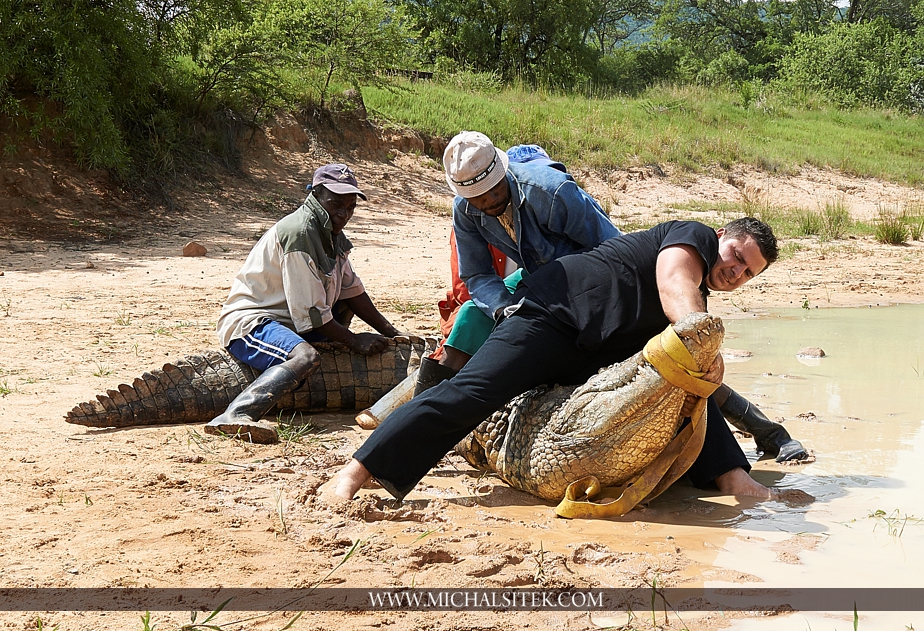
“Almost Like The Crocodile Hunter”
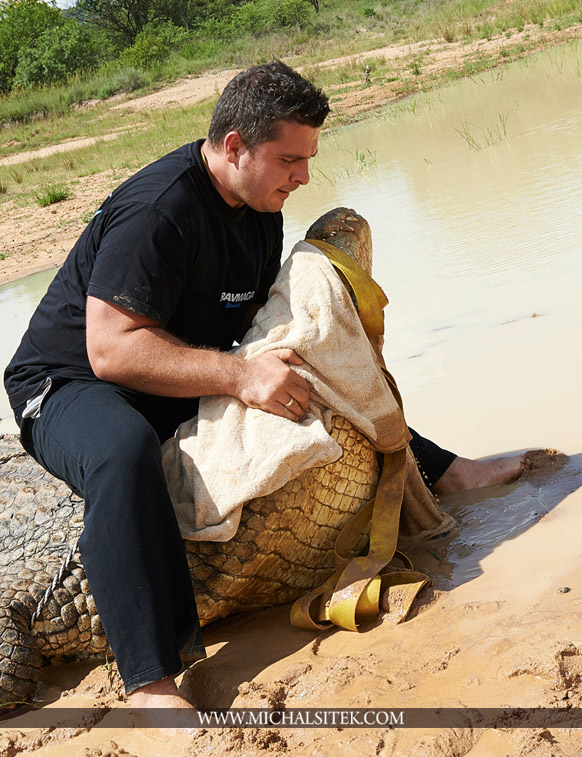
After long preparations, I was able to realize one of my dreams. Incapacitating this beast will always remain in my memory. The question – Wasn’t I afraid? That’s a rhetorical question, but the desire to test myself and the adrenaline brimming in me effectively reduced the fear level.
Crocodiles were forced to find safe, I could say, niche spaces of existence. Those included rivers, lakes and marshy lands. Over the years, they evolved and improved their skills in new conditions. Small crocodiles would prey on young dinosaurs that were leaving their nest – as research shows. Poikilothermism, omnivorousness, an armoured body – the characteristic features developed by crocodiles allowed them to survive to this day. However, they failed to rebuild their dominant position on Earth. And undisputed leaders, the mammals, took over…
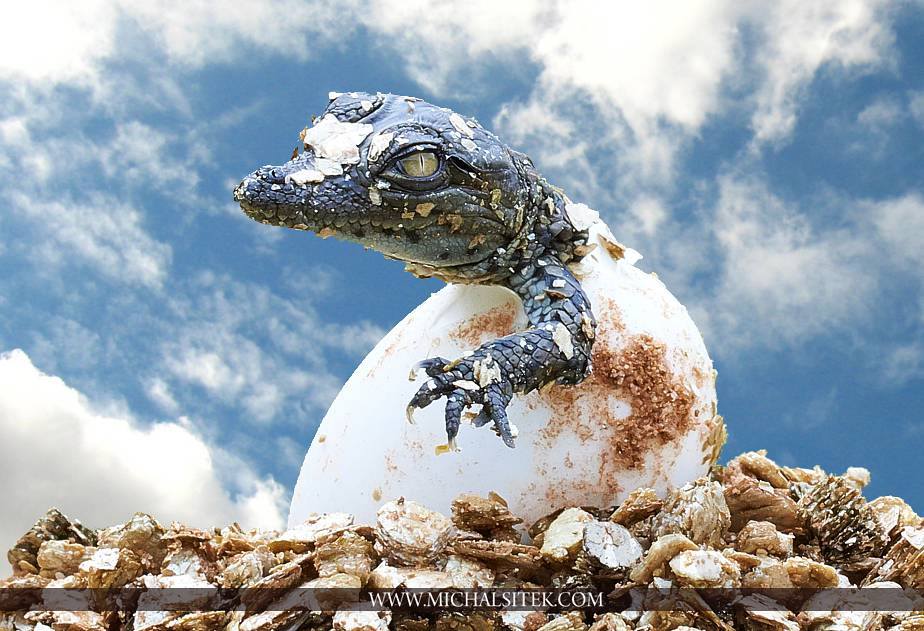
“Godzilla Is Being Born”
The birth of this giant in the future is an amazing experience. After many contacts with adults, seeing the hatching of this obvious power amongst the reptiles is a story undoubtedly worth photo recording. Also for those who were not able to see this live.
Crocodiles belong to a group of reptiles called Crurotarsi. Data shows that they have lived on Earth for over 220 million years, since they appeared in the Triassic period. Thanks to their biodiversity and physical abilities, they became the most dangerous element of the then world, which was tantamount to virtually conquering the lands. At the end of the Triassic era, an unexplored as yet cataclysm destroyed most of the Crurotarsi. Earth was enslaved by dinosaurs.
number of teeth
0
– 80
pcs.
at birth they are
0
– 25
CM LONG
lay up to
0
– 60
eggs at a time
on our planet for
0
mln
years
… crocodylidae
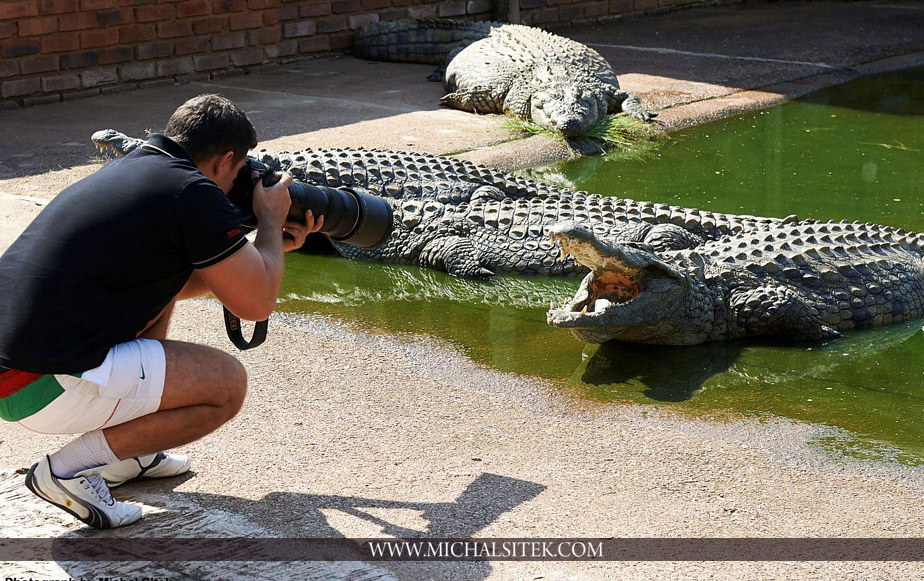
Crocodylidae … and others
Currently, the Crurotarsi are represented by three families: the Crocodylidae, the Alligatoridae and the gavials. The Crocodylidae are found in south Asia, Africa, northern Australia, New Guinea, and North, Central and South Americas. The Alligatoridae comprise alligators and caymans. They inhabit the hot zone of both Americas and eastern China. Gavials, on the other hand, live in India.
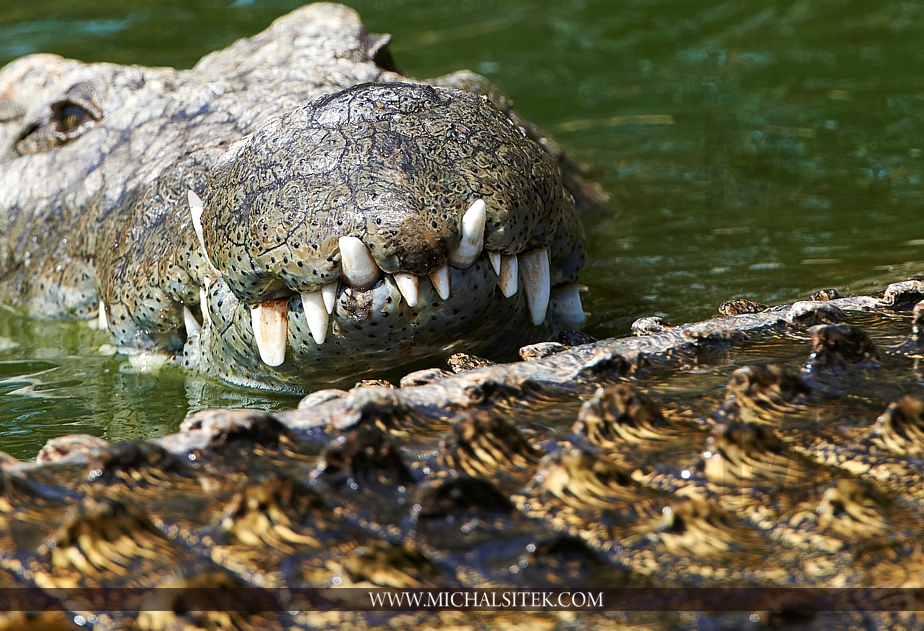
The Jaws
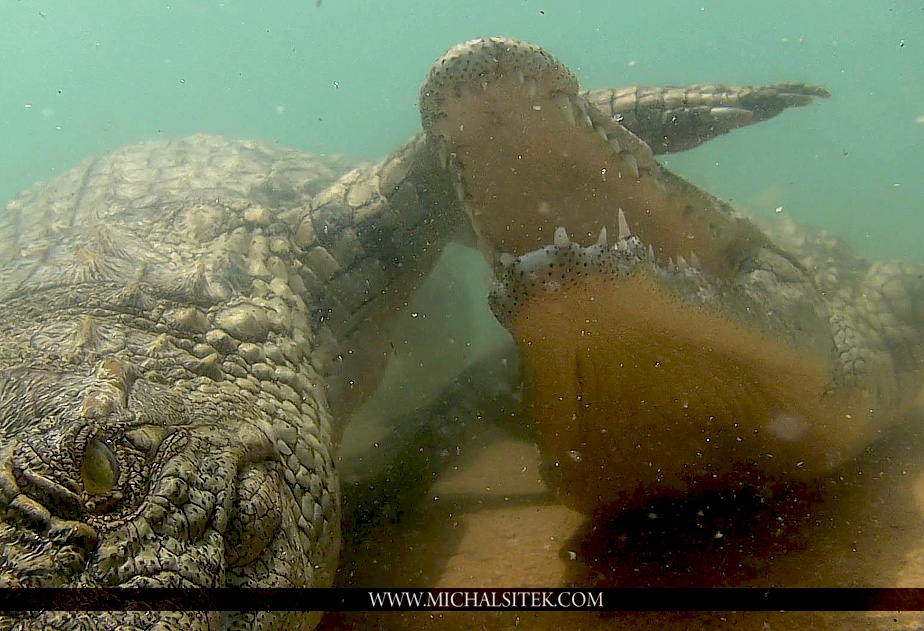
It seems that the open mouth of a crocodile swallows up huge amounts of water. Nothing could be further from the truth. The fold closing the throat effectively blocks the passage of fluid into the body. This peculiar feature is particularly useful in an attack during preying.
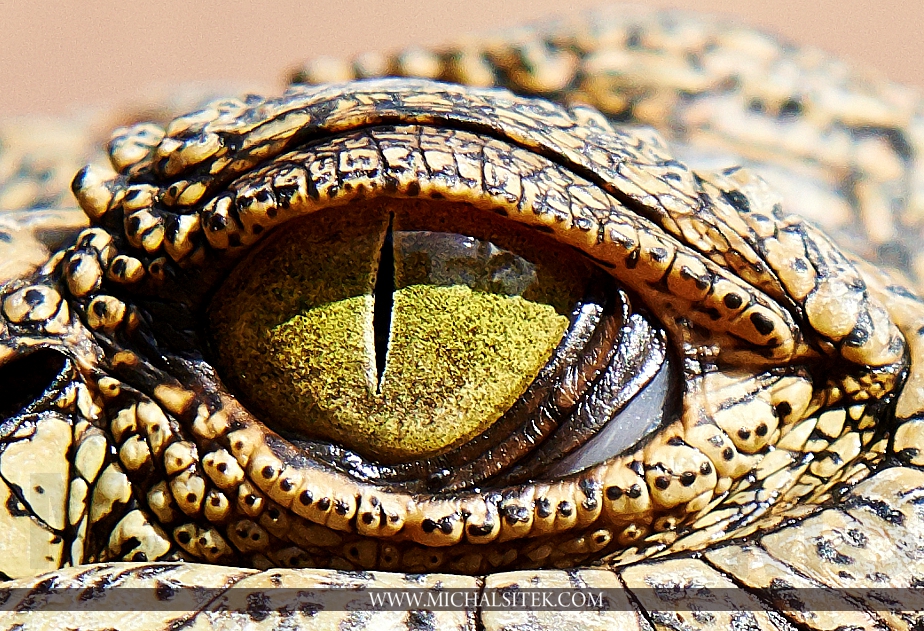
Almost like the Sauron’s eye
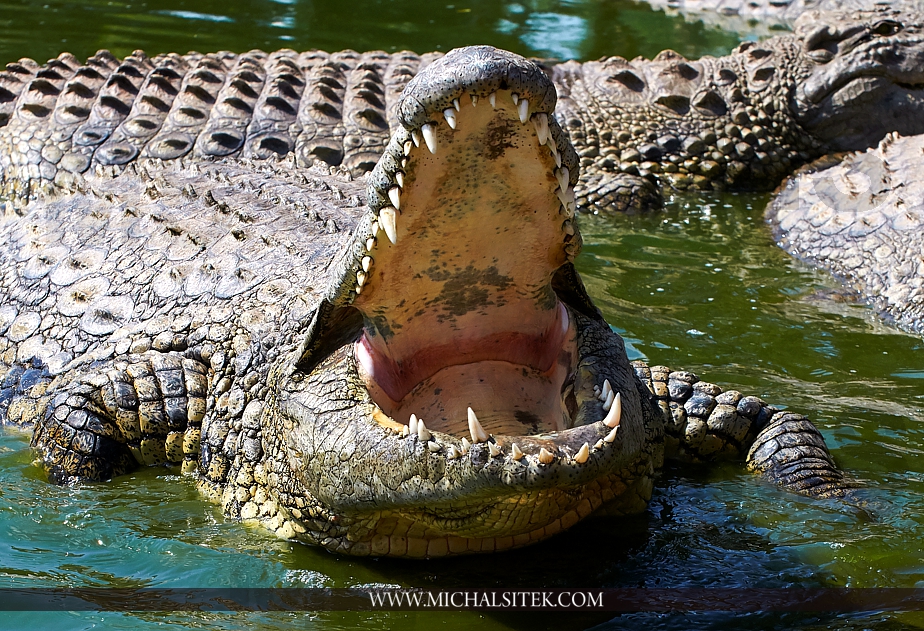
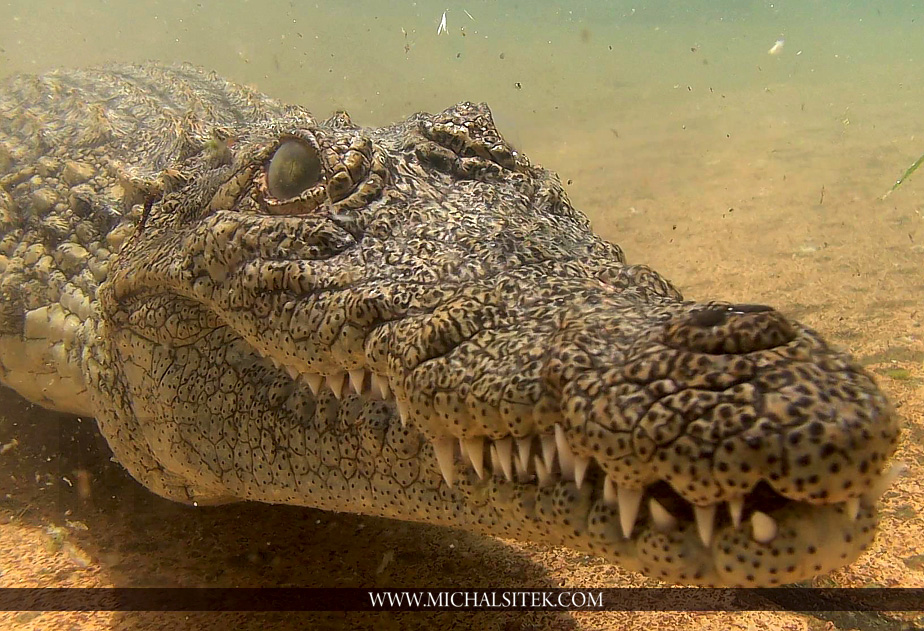
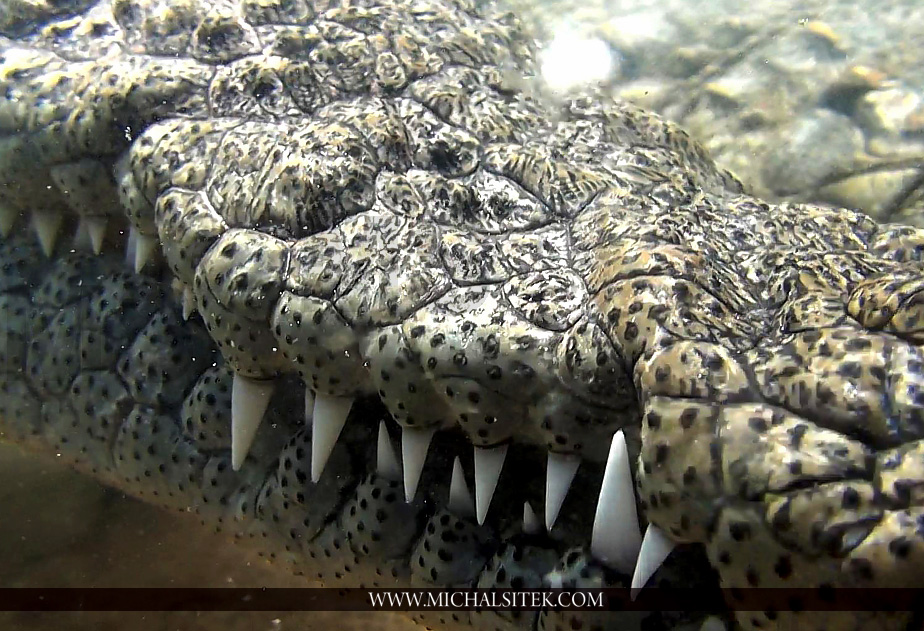
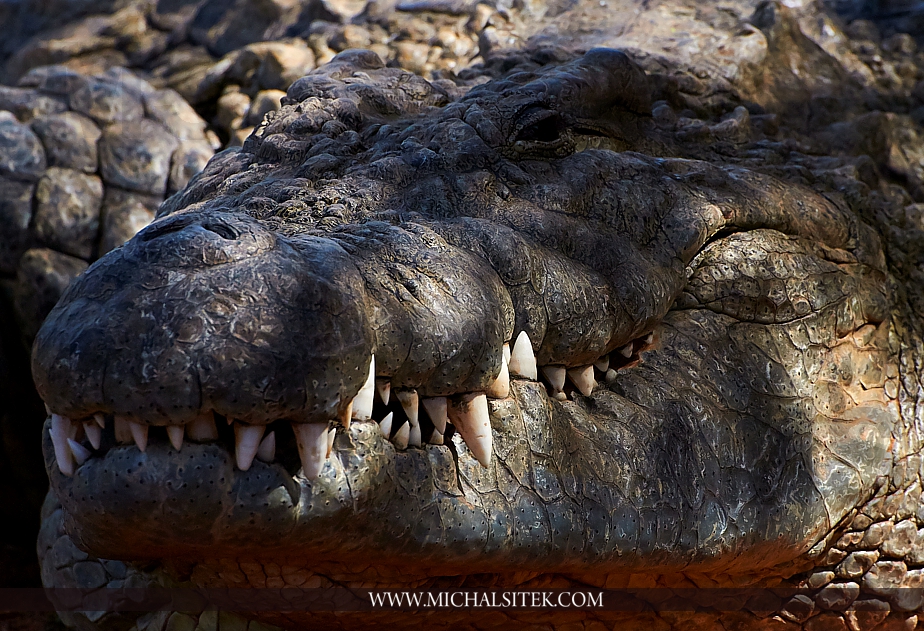
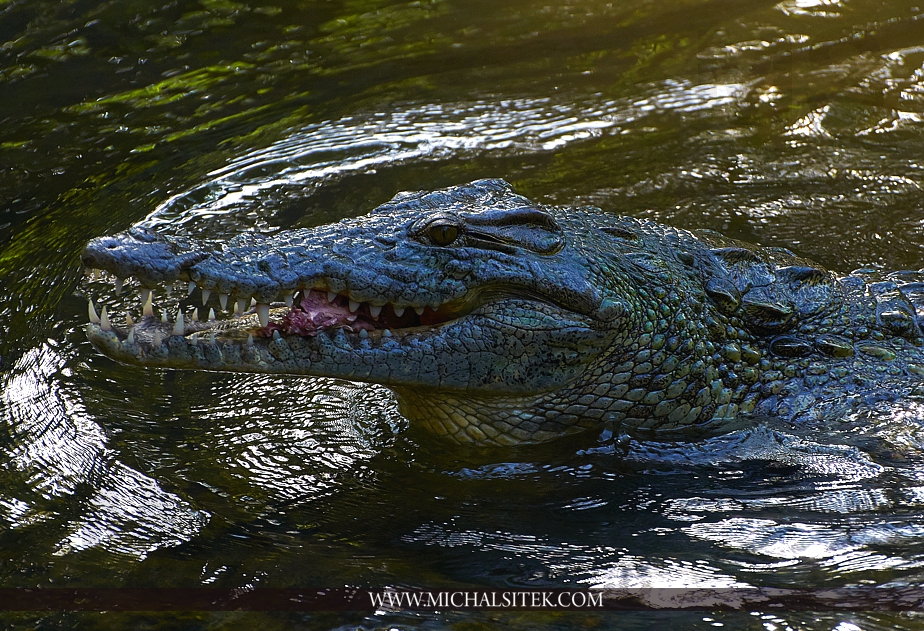
Crocodiles are animals with a saurian-like body shape, covered with bony shields, with jaws featuring teeth embedded in tooth sockets. The head is elongated. The Nile crocodile is characterized by deeply incised jaws and powerful conical teeth of unequal size. The long jaws have the largest teeth visible on the sides of the mouth, while the other teeth are hidden behind the lips. They are embedded thecodontially, that is in tooth sockets. They have healthy and complete teeth virtually throughout the lifetime – any broken teeth fall out and new ones grow in their place. Their number in the upper jaw is approx. 28-32, while in the lower jaw, 32-36.
Education hasn’t gone to waste
He, himself, says about photography: “That which is not perceived and seen by many people in everyday life, for me looks very different. My favourite area of photography is natural macrophotography, which gives me great pleasure. I don’t use intermediate rings and reverse glass attachment techniques. A home-made bellows, a ring light, an S105-S150/2.8 and a diffuser allow me to achieve a pretty good focus with large apertures”.
“Crocodiles, alligators … reptiles are very common objects of my photographic passions. It is not even the beauty and mystery of these fascinating animals that really matters. The emotions and the moment of uncertainty as they attack is something that provokes me to ever closer communion with my favourites of fauna that live thousands of kilometres away from Poland”.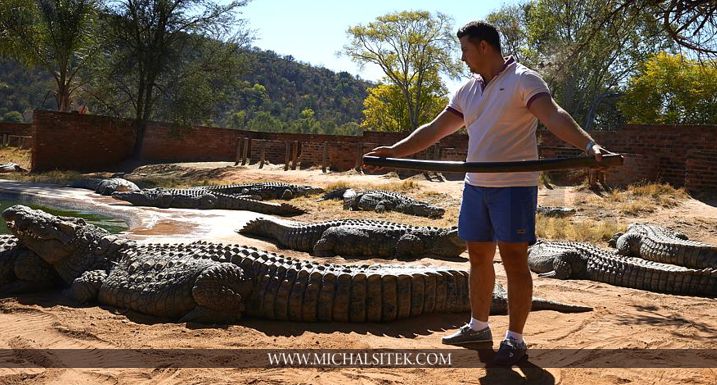
Do you know that…..
Crocodiles are aquatic reptiles and are among the most frightening predators on Earth, due to their size, powerful jaws and aggressiveness. Saltwater crocodiles are the largest reptiles in the world.
The individual families differ from each other in the tooth system. In alligators, 40 mandibular teeth hide in the tooth crevices of the upper jaw. In the Nile crocodile, the fifth tooth is positioned in the upper jaw, and the fourth tooth in the lower jaw – these are the largest teeth. With the mouth closed, these fangs go into special recess in the maxilla and the mandible. The biggest teeth – the fours, go into deep sinuses in the intermaxillary bone. Gavials have 51 teeth of the same shape and size, of which 24 in the maxilla and 27 in the mandible. Their palate is firm and separates the nasal cavity from the mouth cavity. The crocodile tongue is fixed to the floor of the mouth cavity.
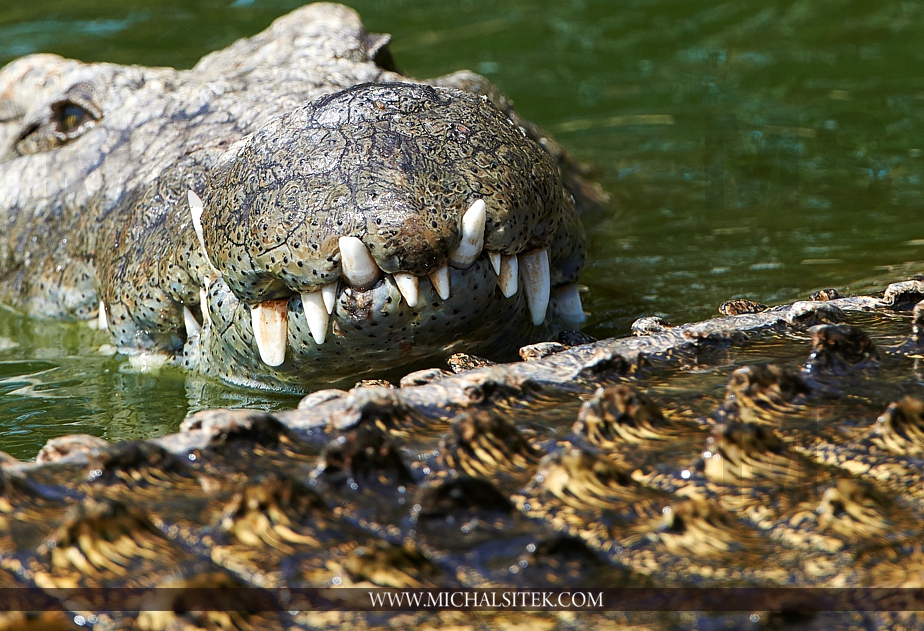
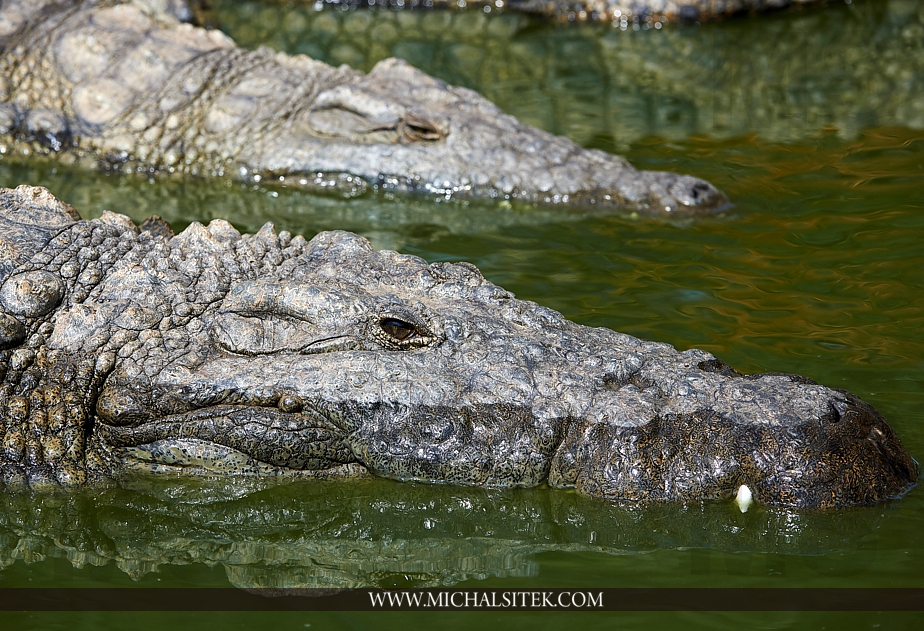
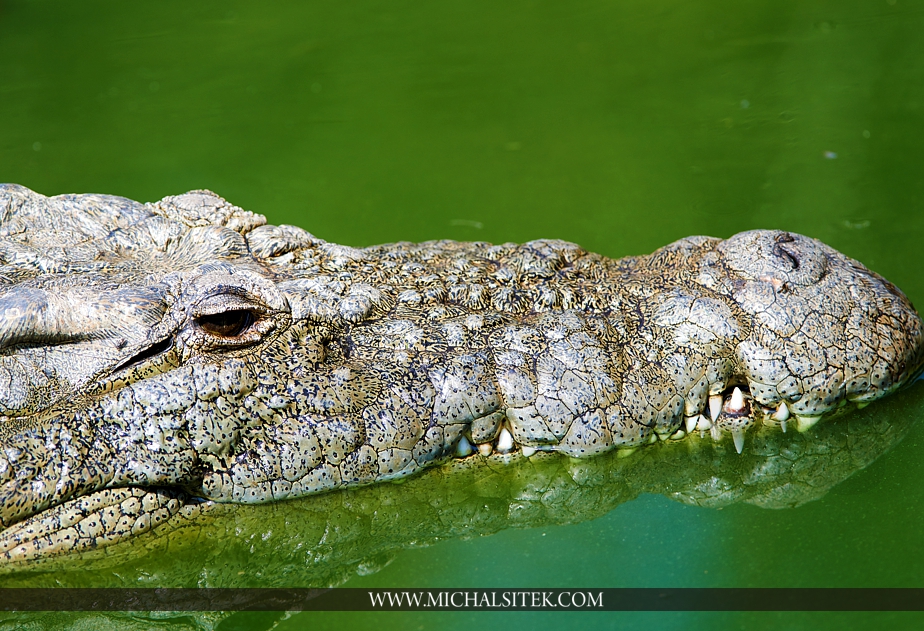
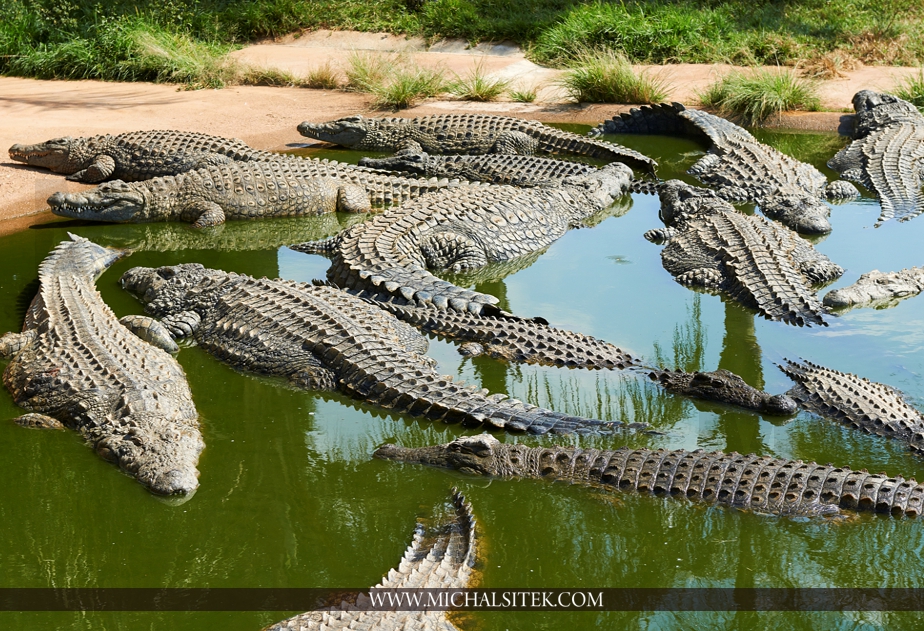
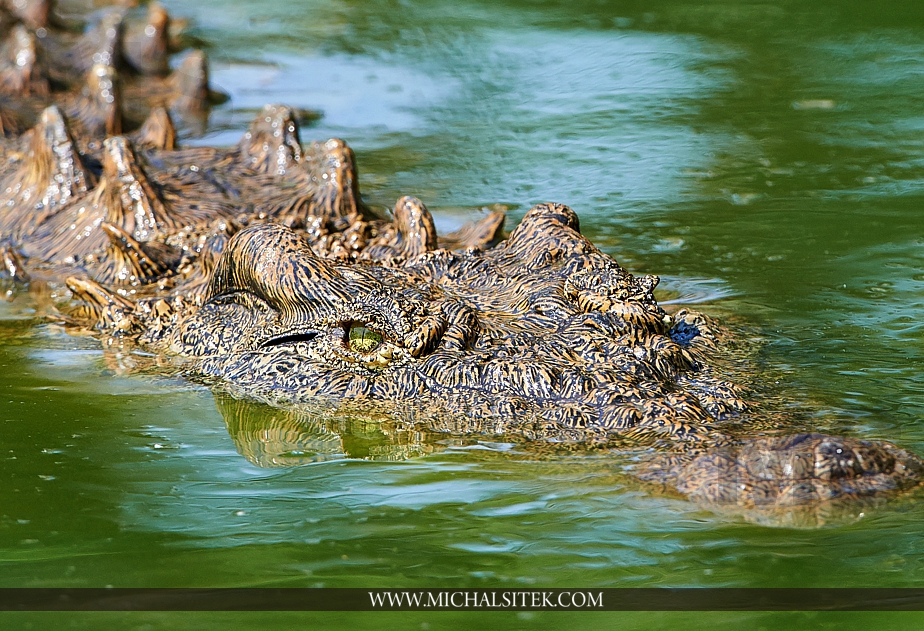
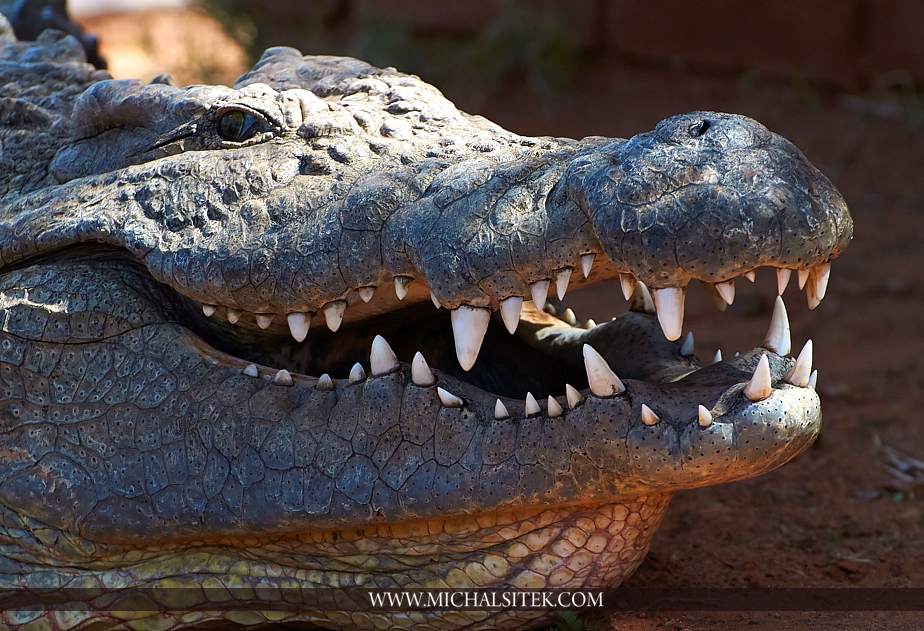
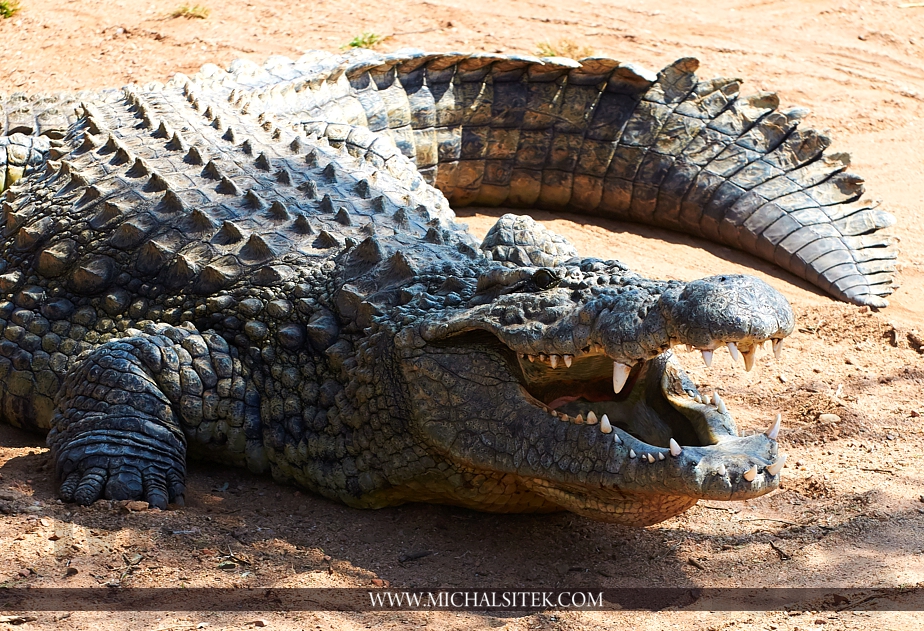
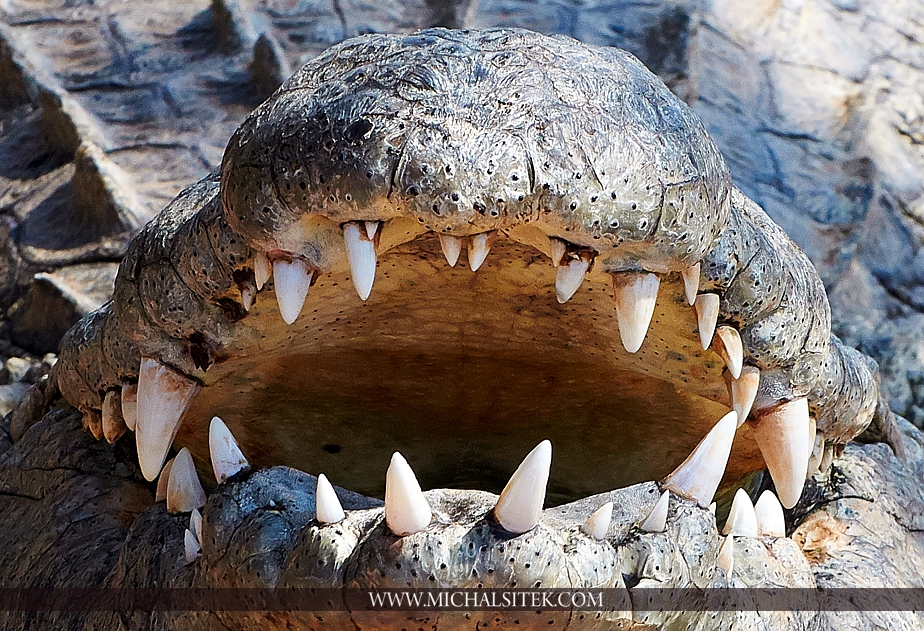
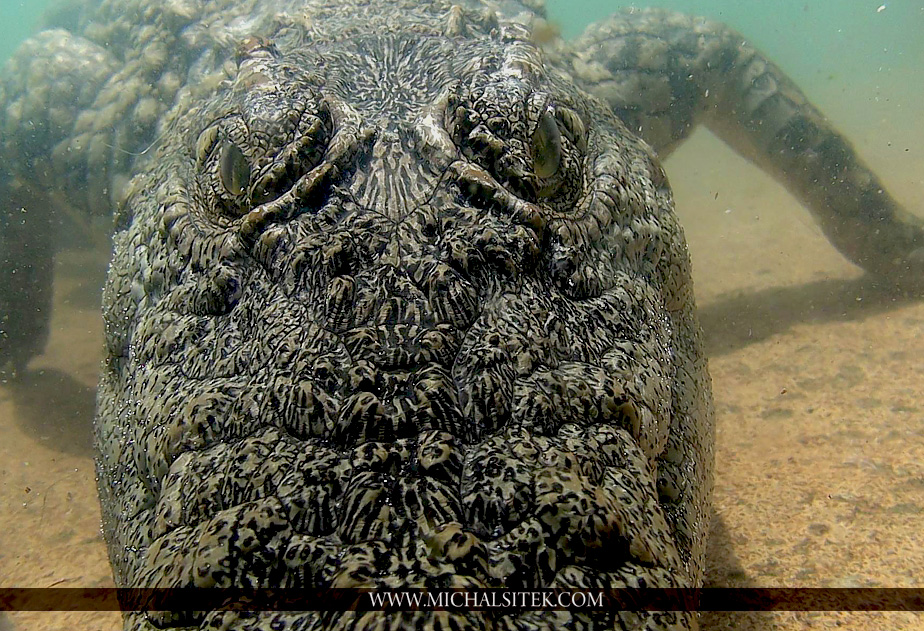
“Michał Sitek, Eye To Eye With A Reptile”
The field of vision and visual acuity of crocodiles under water are not bad at all. The membrane protecting the eyeballs does the job perfectly. Therefore, underwater hunting makes no special difficulty to these reptiles.
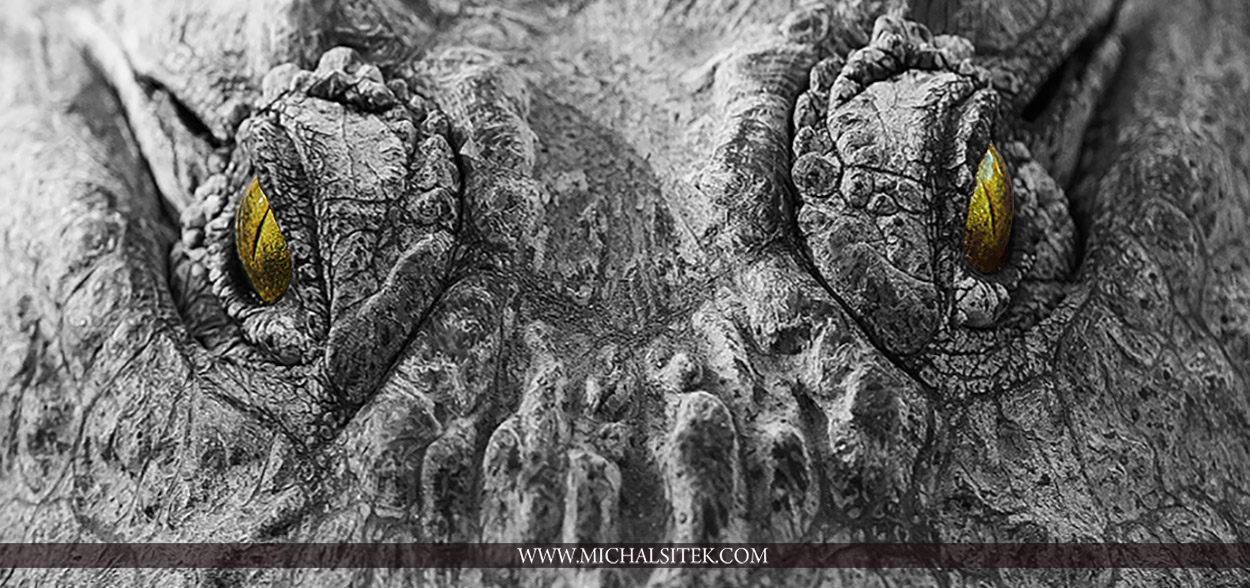
Crocodiles have many of the build features specific to birds and mammals, or higher organized vertebrates. Their eyes are well developed, with green or yellow-green irises. The pupils are slitty and positioned upright. The crocodile eyes have a reflective layer, which offers adaptation to nocturnal life. The body is covered by horn plates and bone discs forming a thick armour protecting the body, especially on the dorsal side. The colour of the back is grey or olive, while the body underside is whitish. In Nile crocodiles, the back part of the body, being green or brown in various shades of colour, is decorated with numerous small black spots. The belly is yellow.
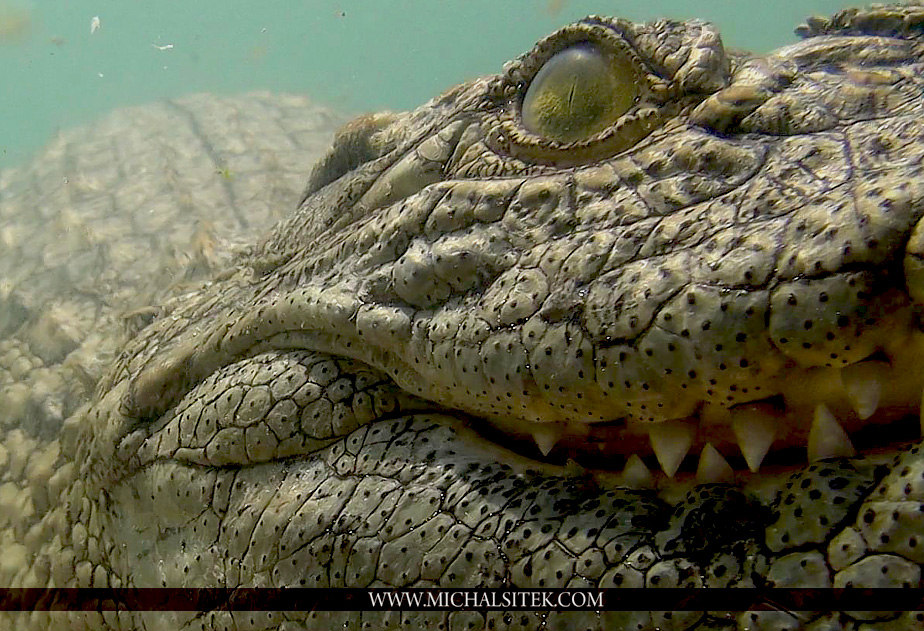
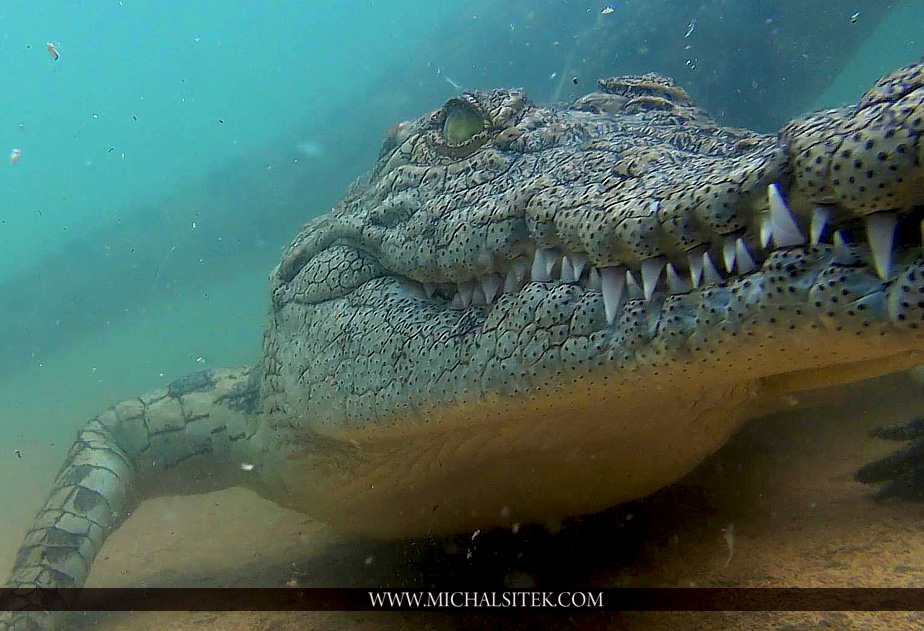
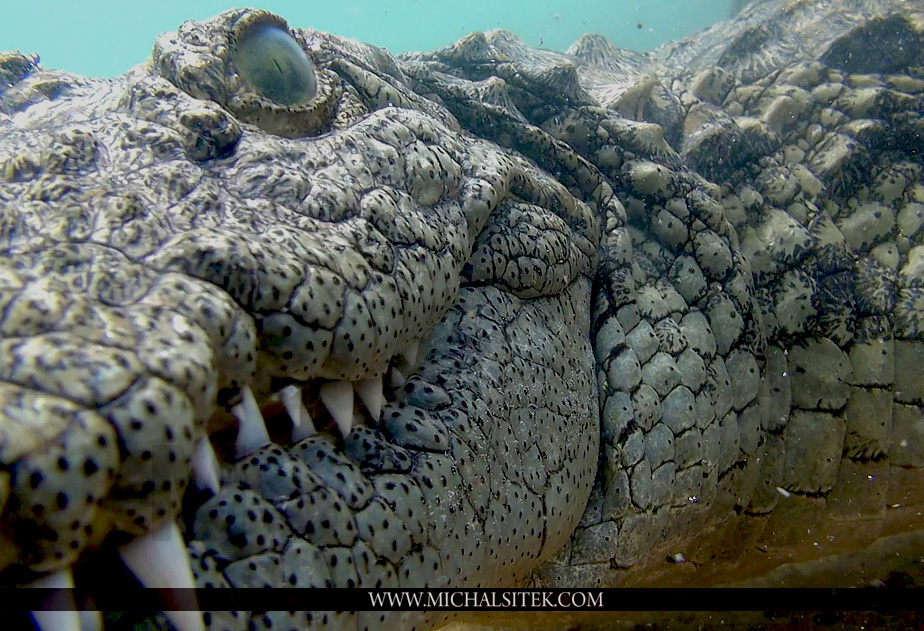
The back is covered with 4-6 rows of horn discs, the highest of which continue to the upper edge of the tail which is strongly laterally flattened. The body is ended with a strongly developed and muscular tail, which provides a kind of a drive during swimming. Two pairs of short, strong legs, whose front fingers are free and the rear ones are wholly or partially webbed. In contrast to other reptiles, they can produce loud sounds. Crocodiles grow up to 6 m in length (as counted from the head to the tail) and reach up to 750 kg in weight. Of course, bigger “specimens” do happen. Their life span can be as long as 60 years.
The mating season in crocodiles is dependent on the climate conditions. Temperature has the greatest impact on species living in temperate climates. In animals living in the hot zones, in turn, the advent of the dry season has the biggest influence. Each species of the crocodile family is oviparous. The crocodile reaches its sexual maturity at the age of 7 years, with a body length of over 200 cm.
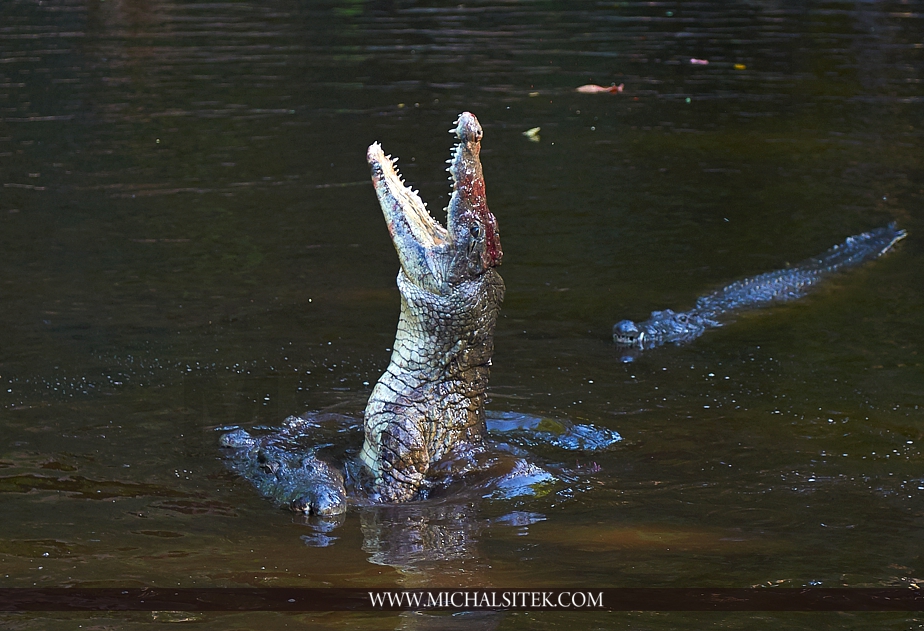
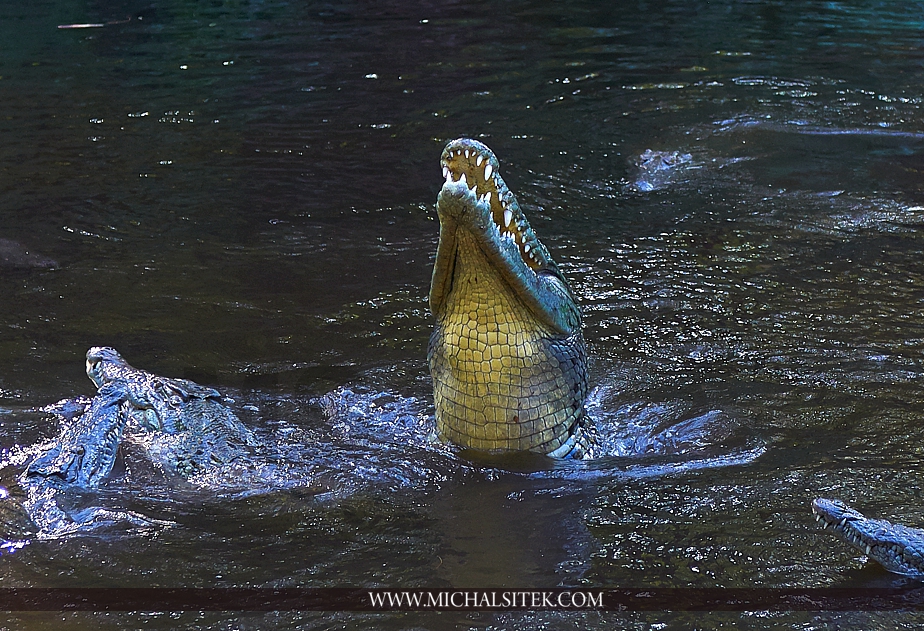
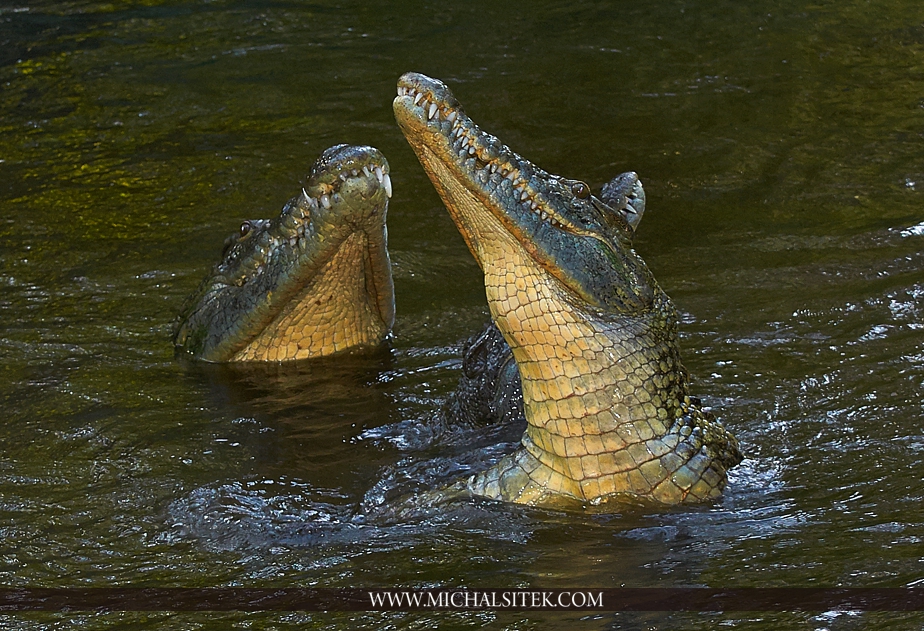
Their courtship looks interesting. The male rises water fountains into the air by making vigorous movements – he hits the water surface with the tale, while letting air bubbles from his mouth. The copulation lasts for about a minute. After roughly one month, the female lays eggs on the land. After building a mound (the material being sand, mud, leaves and plants) or digging a cavity in the sand, she lays eggs (in the number of 30 to 70) (every half a minute) and covers them with a layer of vegetation. The process of incubation is influenced mainly by the temperature. A piece of information worthy of noting is the aggressive maternal instinct of the female, which is a unique feature among reptiles. An intruder appearing near the nest has to take into account serious consequences.
The incubation process takes about 3 months. The crocodile sex depends on the temperature to which the eggs are exposed – if the average temperature in the nest ranges between 32 °C and 34.5 °C, then males will hatch out. If the temperature is either lower or higher – females will be born. At this time, the female takes care mainly to wet the eggs. The mother passes urine onto them or sits down on them immediately after going out of the water. It happens that the female does not eat virtually anything during this period, using the fat deposited in her tail and fingers to satisfy the hunger. Being ready to hatch, the young make indicating sounds.
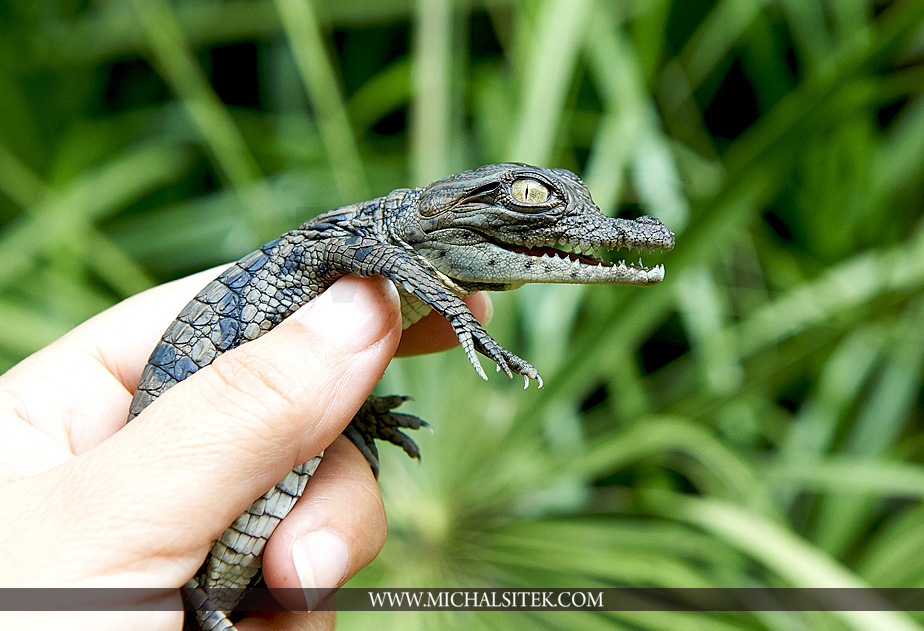
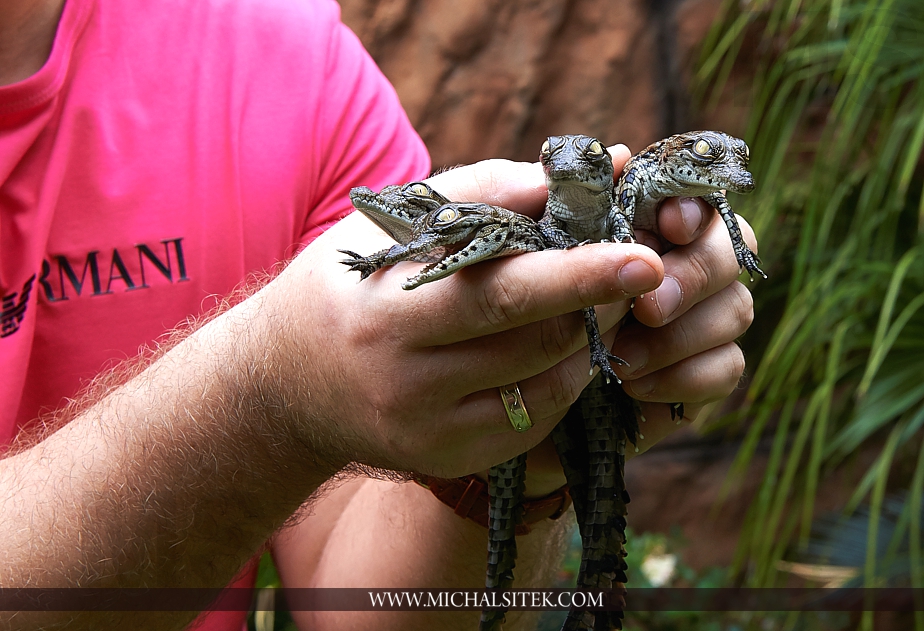
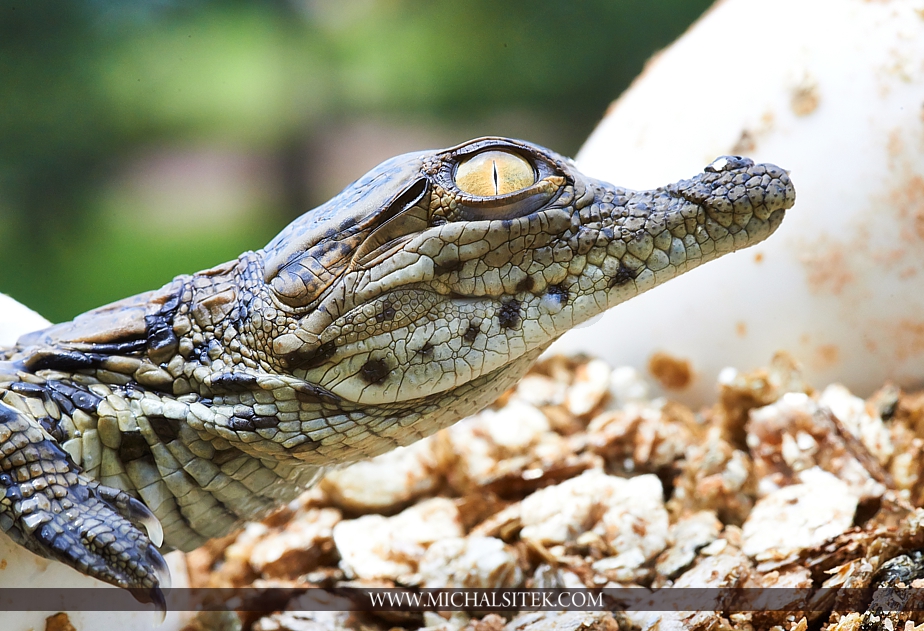
To break through the egg shell, the young use the so-called egg tooth. The mother digs out the nest and takes the young in her mouth to the water, where they are able to swim right away. Most of young crocodiles become victims of other predators, leaving the average number of surviving specimens being about three. Their length ranges from 20 to 30 cm. In some species, cannibalism was found among males. Initially, young crocodiles feed on arthropods and as they mature, their menu starts to include molluscs, crustaceans, fish, reptiles and amphibians. One year after hatching, their size is already two times larger, and after a further 6 months they begin to move away from the reservoir. They leave their nursery permanently after 3 years.
Generally, food for crocodiles can be anything that will appear within the reach of their jaws. Starting from birds through to mammals. They won’t scorn carrion and smaller individuals of their own species, either. Due to their considerable size, their victims can be even adult antelopes or smaller elephants. In practice, a smaller-size prey is swallowed alive. Larger victims, in turn, after being tracked down, captured and drowned, with quick movements of the head are rent into parts that can be swallowed. Crocodile teeth are not sharp enough to dismember a meal, they are mainly used to hold down the victim. After killing a victim, the crocodile makes a rapid movement around its own axis with the aim of dismembering the victim’s body. When hunting for fish, the crocodile drives the fish to the shoal and then swallow them in whole – the head forward, so that the gills do not slash its throat.
Male Instinct
The male instinct manifests itself in assigning their territories by the biggest and strongest specimens. They closely observe their territory, and with their aggressive posture they prohibit other males to cross its borders. The mating season is the time when huge males begin to fight for female charm.
Attacks on humans also happen. They result in several or even several dozen fatalities a year. An Australian accident in the Daly River, where a 20-year-old man was eaten by a crocodile in front of his wife – is not an isolated one.
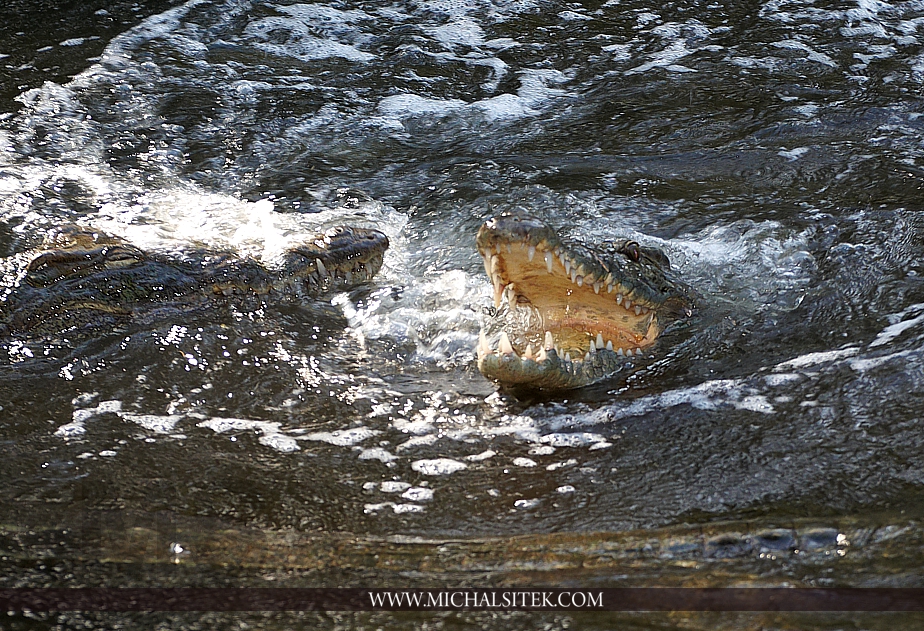
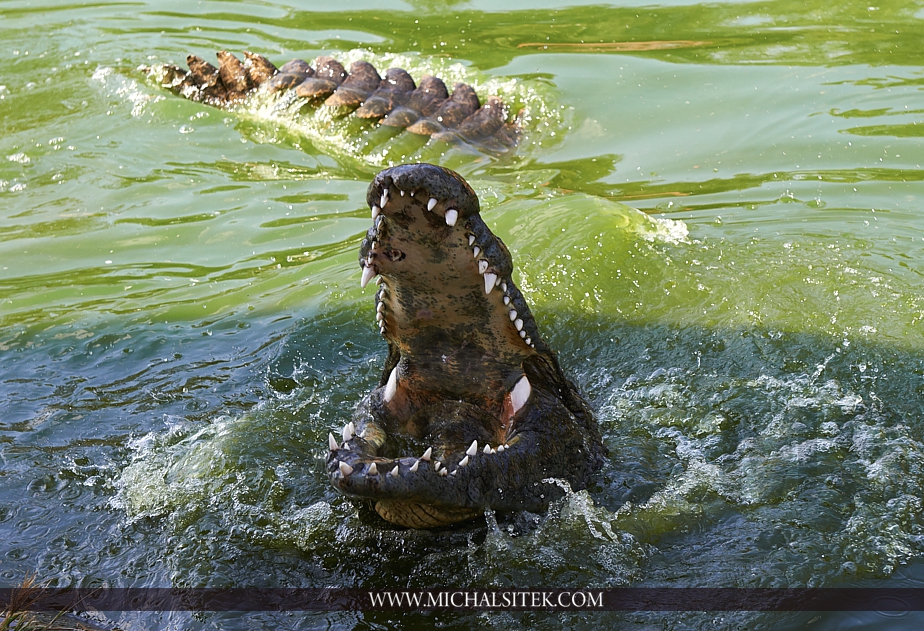
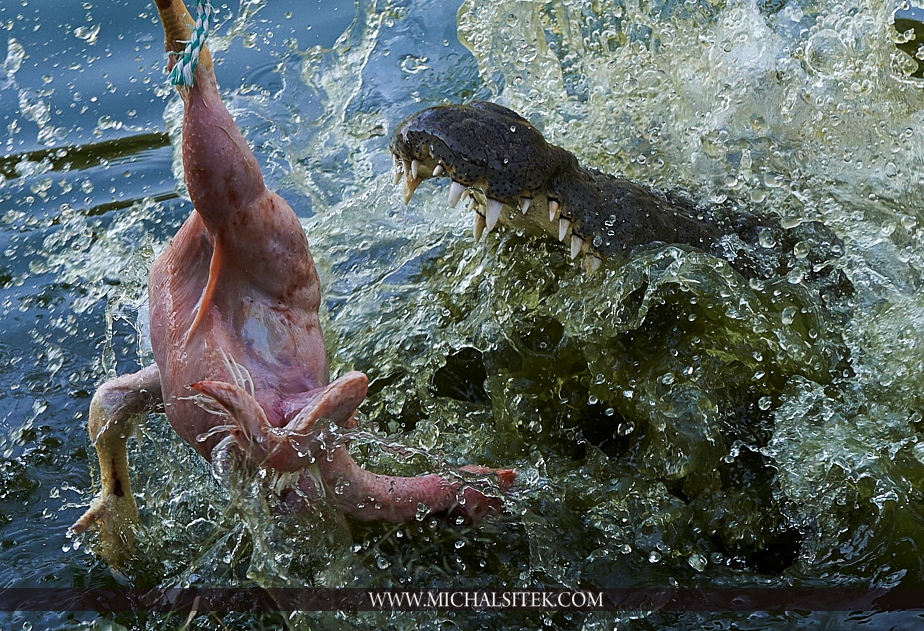
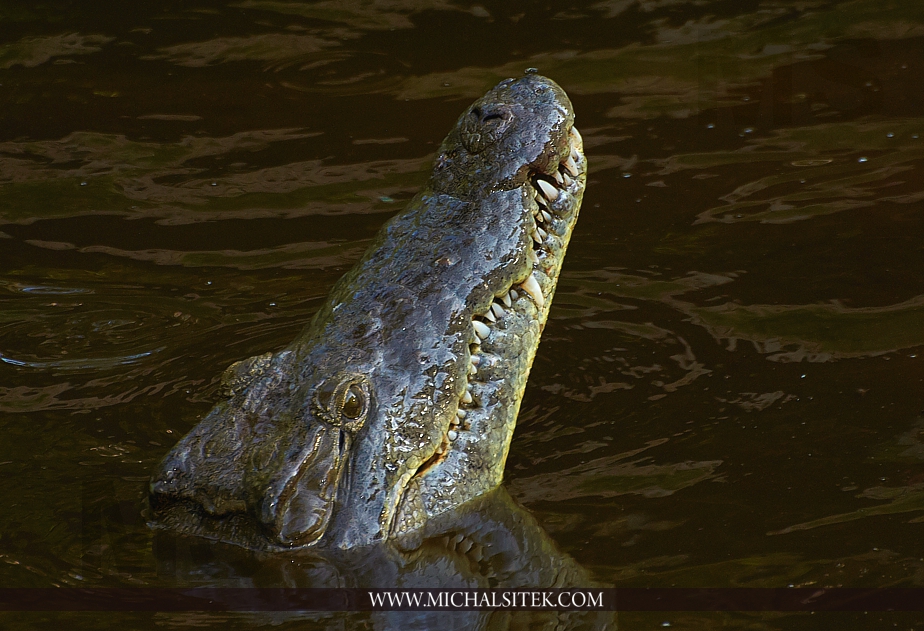
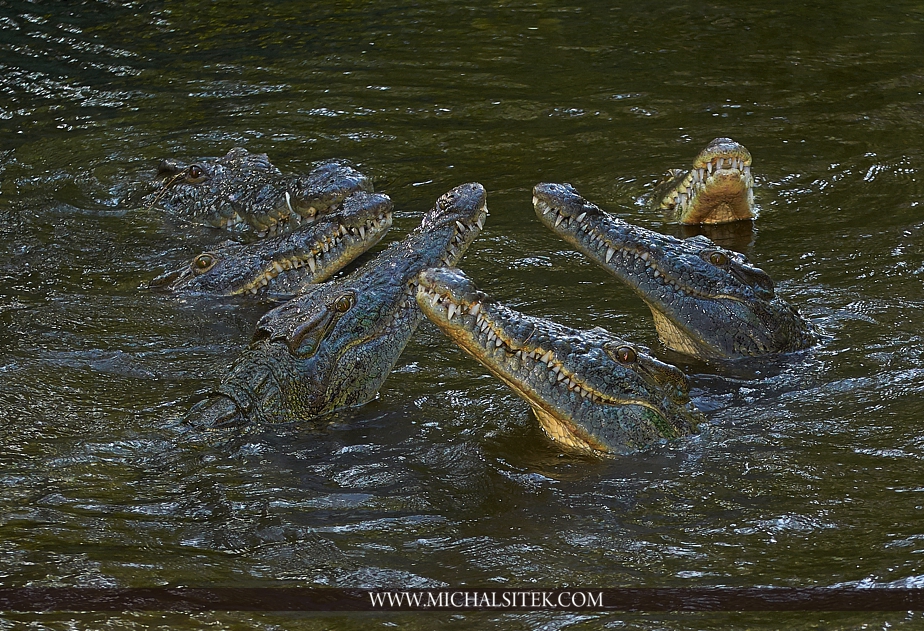
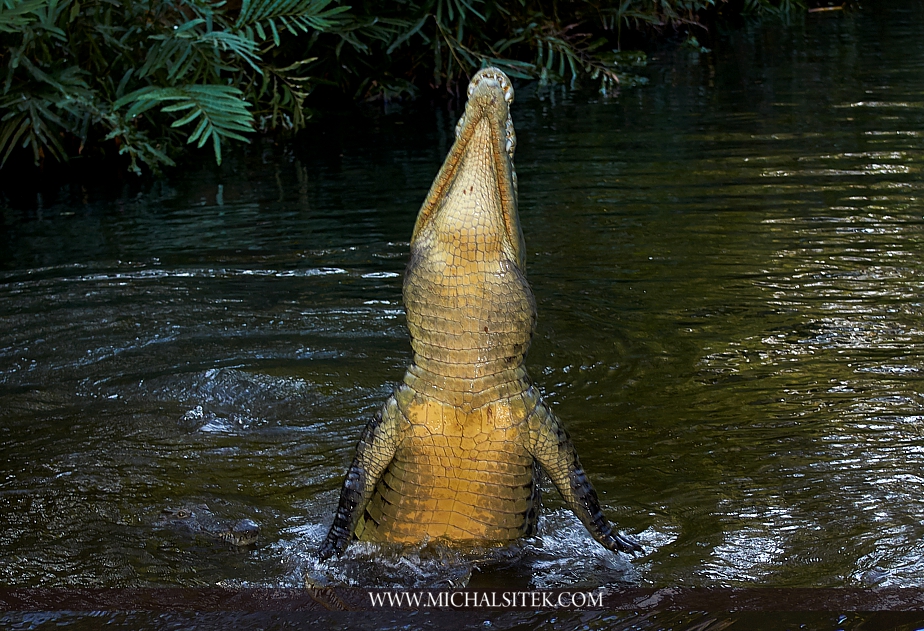
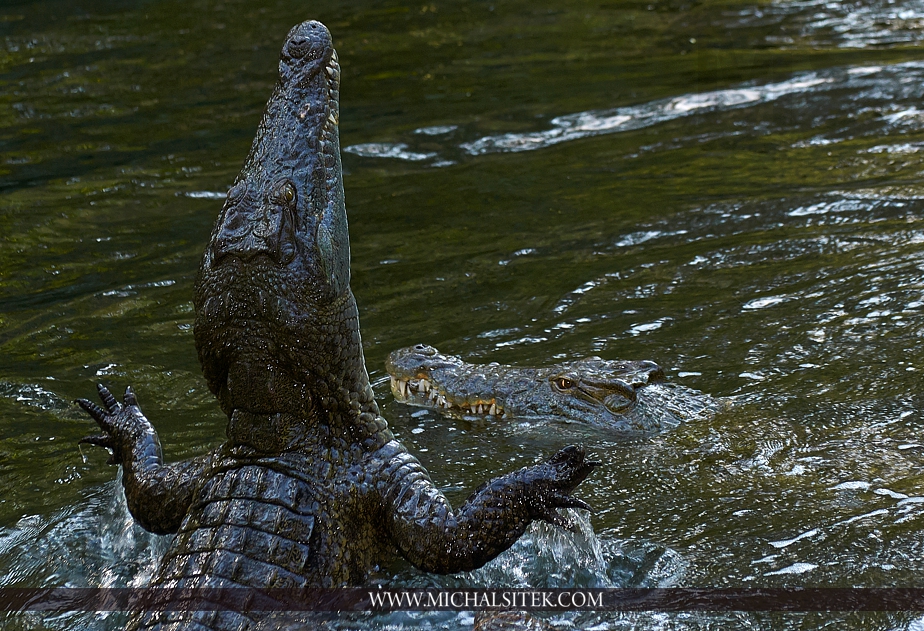
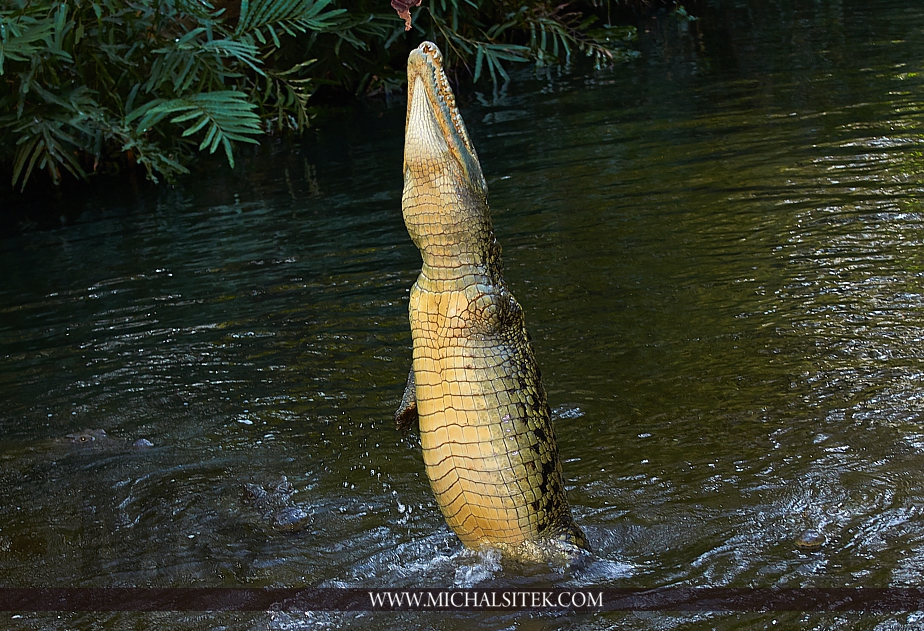
When attacking, a crocodile can reach a speed of up to 120 km/h. The Nile crocodile has acquired a distinctive feature, that is the high endurance of the lack of food. They are able not to eat for several months. Crocodiles have also become an object of worship. They were among animals worshipped in ancient Egypt. Sobek – the Egyptian god of fertility and water had the head of a crocodile. It was in honour of these reptiles that the city of Crocodilopolis was founded. In some parts of the world, mummies of these reptiles were buried together with the bodies of high-ranking people. Indigenous Australians used to believe, in turn, that one of the biggest rivers was formed by the “act” of a crocodile, which created the river bed after chewing up the land.
Crocodiles live mainly in freshwater. They inhabit large lakes, rivers and vast marshy lands, and more rarely – the sea estuaries and coastal areas. There are also species that occur in salt water. Their proper habitat is water; they are rather reluctant to come ashore. Among crocodiles, the following species are distinguished: the rosary, the American, the Nile, the marsh, the New Guinea, the Orinoco, the Siamese and the short-mouthed crocodiles.
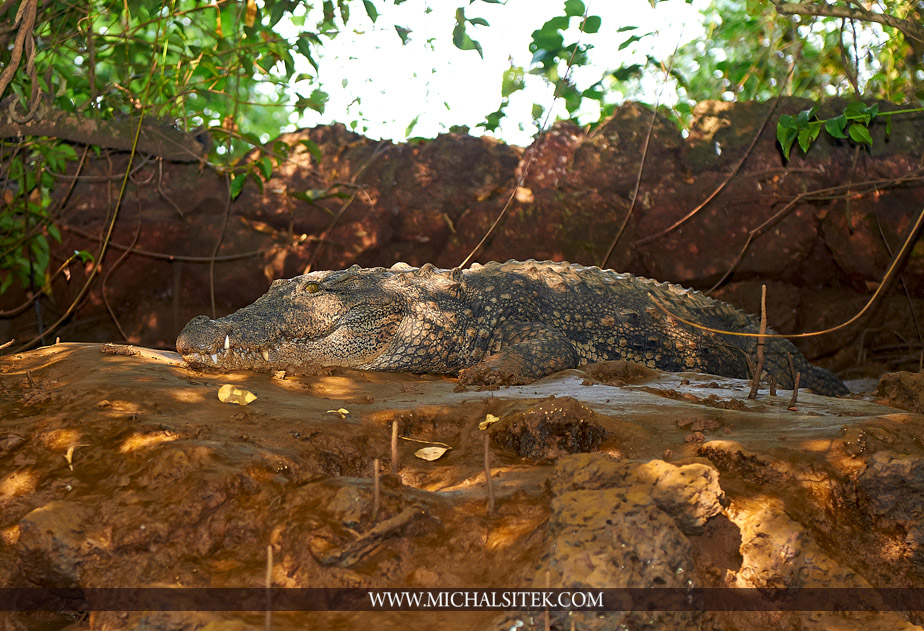
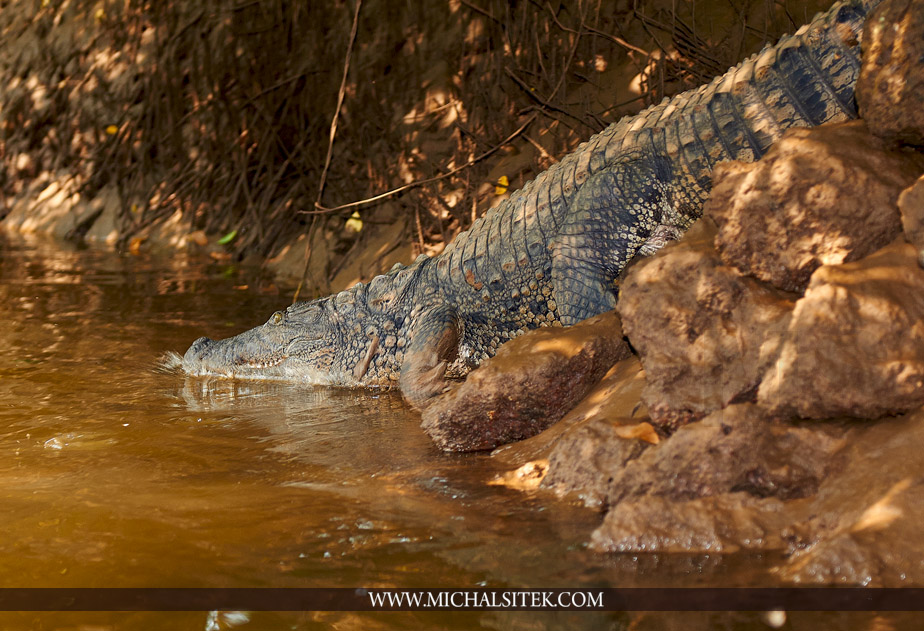
The crocodile heart and muscles enable the slowed-down flow of blood and the closure of the otic and nasal openings, which allows a prolonged immersion in the water. During diving, the pulmonary blood circulation is switched off by opening a hole in the aorta. The Nile crocodile is able, e.g., to hold its breath for 45 minutes. Sometimes these crocodiles are lying immersed in water for hours, and only their eyes and nostrils can be seen above the water surface. During the day, they lie in the sun; they slow down their breath, and their heart begins to beat slower. This is their rest time, where their vital functions slow down, whereby they save a considerable amount of energy. At that time, they can often be found with open mouths. The crocodile body of the is thus cooled, while any food waste is pecked out from the crocodile’s mouth by birds that live in symbiosis with it. In the case of the Nile crocodile, this cooperation involves the cleaning the crocodile’s mouth from residues and parasites by the Spotted squeaky, which feeds this way. Species living in very hot areas protect themselves against heat by burying themselves in silt and falling into a deep sleep. On land they move slowly and sluggishly; however, they are able to sharply accelerate suddenly. It is in the water that they exude energy, and there they mainly feed.
In northern Australia live crocodiles which have adapted themselves for living in salt water. Fairly often they can be found in the ocean. Those that have the ability to live in sea water, can cover even up to 5 thousand km during their migrations. According to the information obtained by Australian researchers, crocodiles can cover that long distances by using ocean currents. These reptiles can “surf”, as they put it. This fact can explain their presence on the islets situated far away from the continent.
“The Amateur of Human Meat”
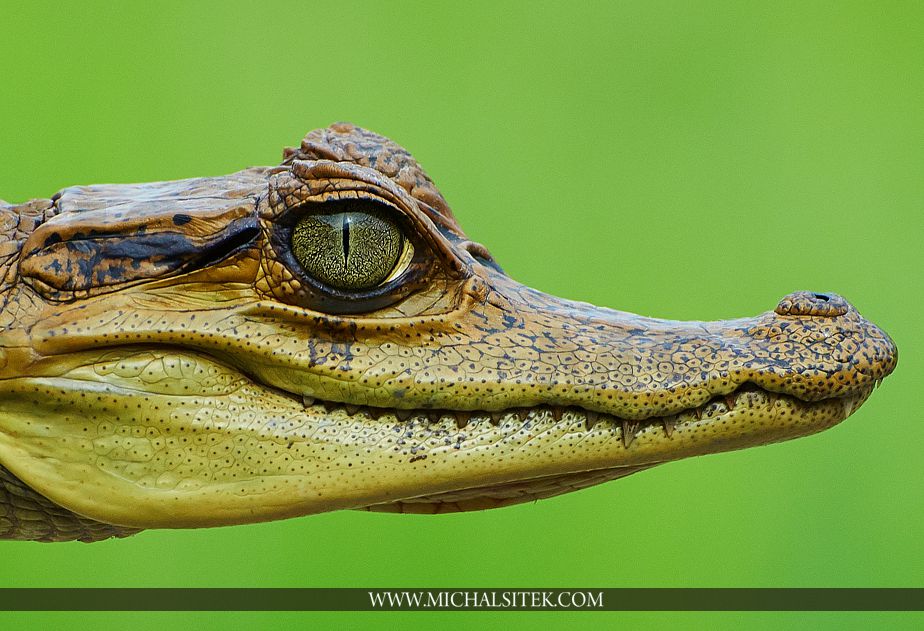
Guests staying in the Orinoco river basin cannot pass indifferently by its inhabitant. The cayman of the alligator family is the master of its territory, and is considered the most dangerous reptile in the region. It poses a threat to bathers and to the women washing clothes on the banks of the river. This reptile is a bridge between prehistory and the present time.
The smallest representatives of the crocodile species are the caymans, whose length does not reach 1.4 m. The largest currently living crocodile is the rosary crocodile that reaches a length of 7 m and weighs up to 1 tonne. The largest crocodiles lived in Africa more than 2 million years ago (as described in the Journal of Vertebrate Paleontology “, they measured over 8 m in length) and their size would allow them to swallow an adult human without problems.
Crocodiles have virtually always been the object of desire of hunters, due to their tasty meat and precious skin, which is used for the manufacture of a range of valuable accessories. Demand for crocodile skin is still very common, still making these reptiles a tasty morsel for all sorts of cruel men. The price offered for it reaches an imposing height, which makes such a great temptation that not only older specimens, but also mothers with their offspring are killed. The opinion that the civilization development of humankind is their biggest enemy is not unfounded.
Deforestation, land reclamation and building dams on rivers all significantly contribute to the reduction of the population of these fascinating animals. They were also eradicated by indigenous inhabitants due to the fact of being dangerous to humans. The dreadful reputation they have might be proved by the panic triggered by the 15 thousand crocodiles that escaped from a breeding farm in South Africa during a flood in 2013. In north Africa, virtually all crocodiles have been killed off from their habitats. It is very likely that the Indian gavial does not occur in the wild at all, even though once the rivers abounded in this species of reptiles.
Currently, crocodiles under protection in every region of the world. This increases their chance of survival.
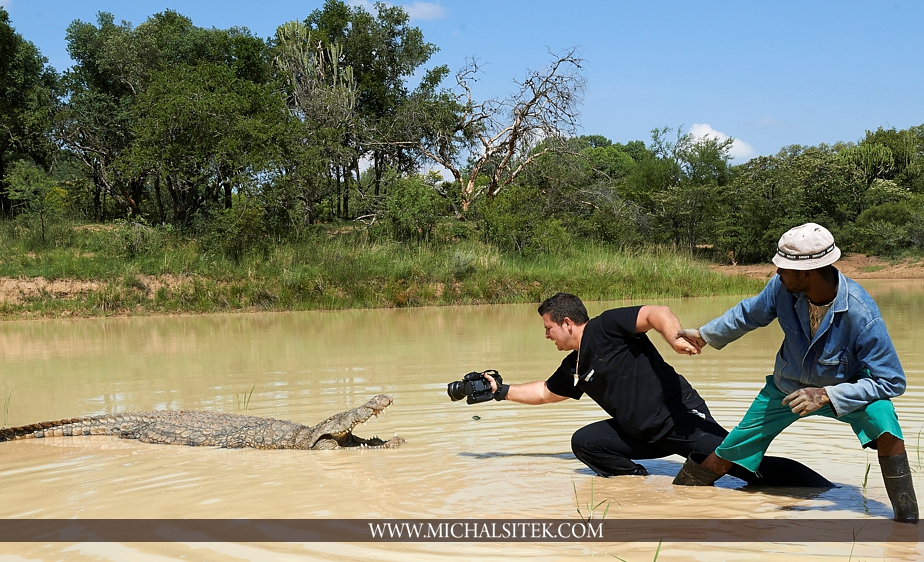
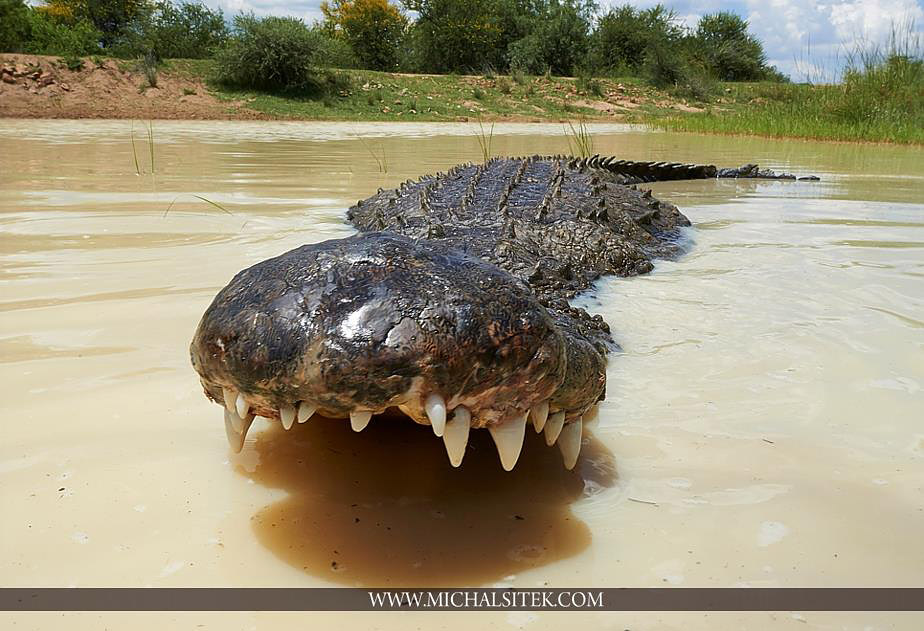
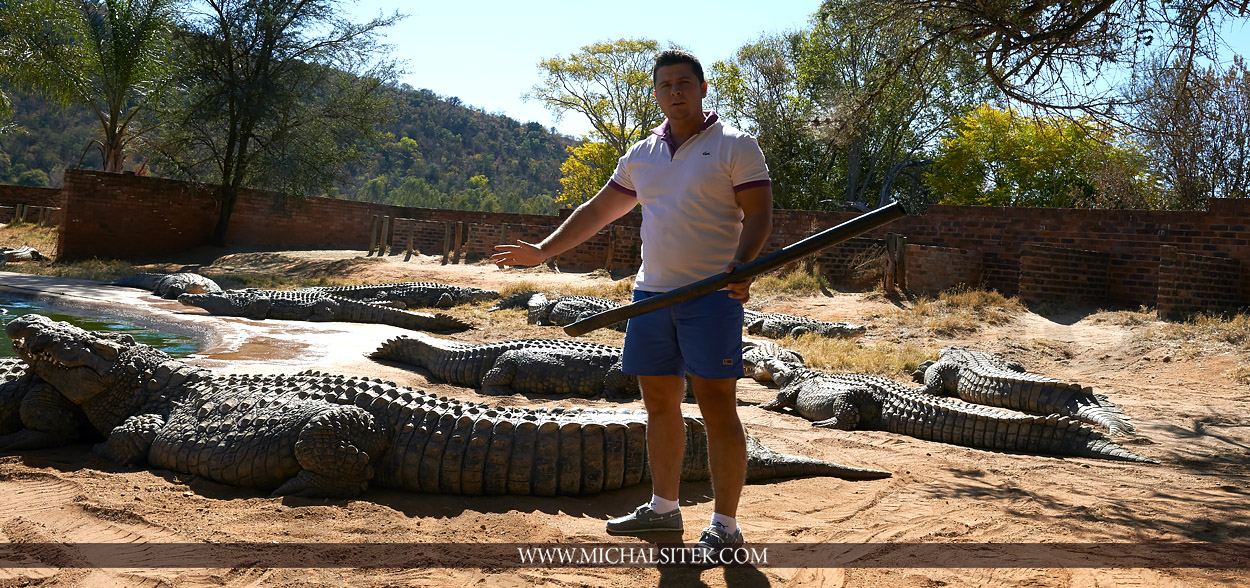
photo. Better safe than sorry It seems that my passion is a one-man activity. No always. To make a unique shot, a companion is sometimes needed, who will lend a helping hand to get away in one piece from an oppression.
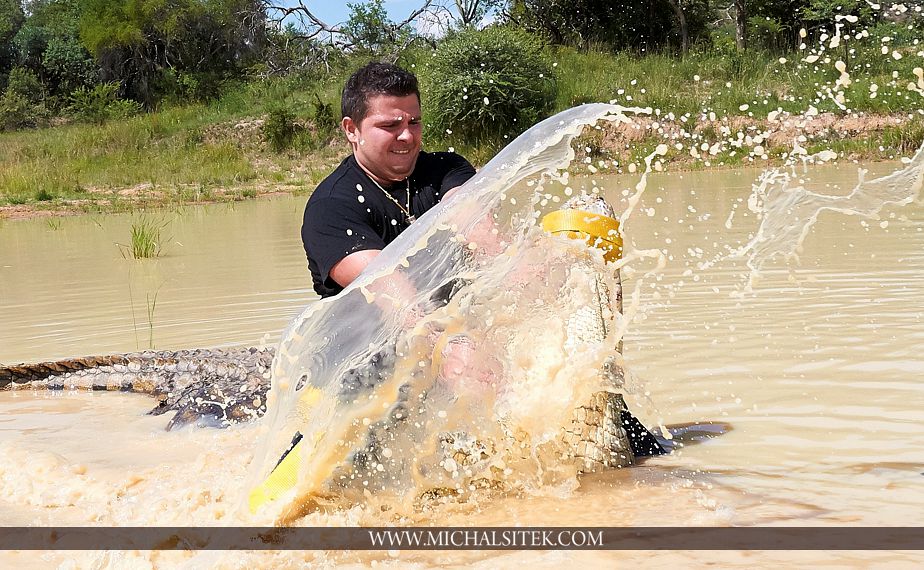
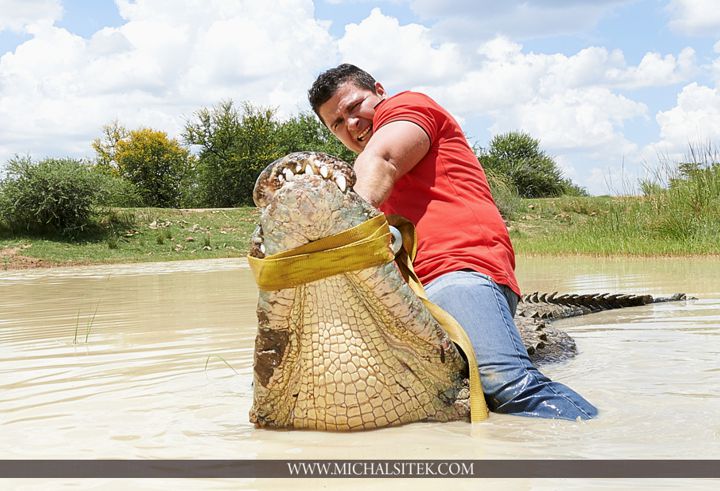
photo. Sometimes you have the upper hand It is a risky passion – I can say this with a clear conscience. But close encounters with huge crocodiles offer me a pure pleasure. Perhaps this isn’t too safe, but what can stop the real man of passions?